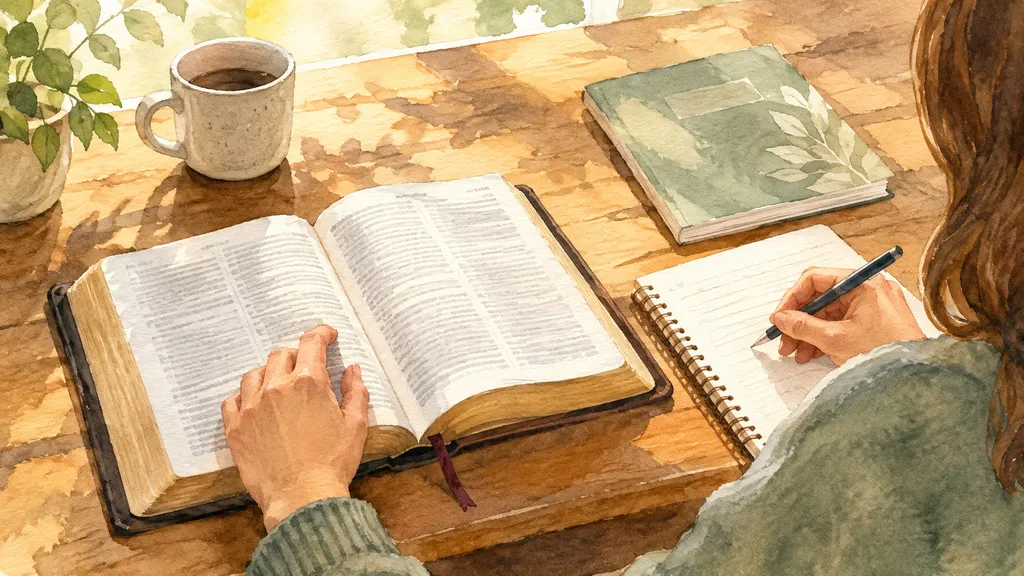
Bible study topics that spark thoughtful discussion and reflection
Choose a passage-led topic on prayer, forgiveness, hope or community, then use focused questions to move from reading to thoughtful discussion.
 Published by Gospel Daily6 min read

Choose Bible study topics around a question you want to explore: prayer when words are difficult, forgiveness after conflict, hope in suffering or serving others. Begin with one complete passage, ask what it communicates, and then consider a response. The ideas below give you starting passages and discussion prompts for personal reading or a group.
Choose Bible study topics for your readers and time
For beginners, try a single story before comparing several biblical books. Experienced readers could trace an argument through a chapter or compare related passages. Alone, write your observations before consulting notes. In a mixed group, choose a passage everyone can read together without advance preparation.
As suggested planning allowances, give one short passage 20 minutes, a fuller discussion 40 minutes, and a connected series several meetings. These are starting points, not measured completion times. Choose fewer questions if you want space for everyone to speak.
If locating passages is unfamiliar, practise finding a book, chapter and verse before your session. Start with your Bible's contents page, then locate the chapter and verse numbers.
For a hypothetical group stationery budget of £10.00, suppose four notebooks cost £1.50 each: 4 × £1.50 = £6.00, leaving £4.00. This is an example budget, not a required purchase; you can use paper you already have.
Bible study topics on faith, prayer and trust
Prayer and daily needs
Read Matthew 6:5 to 13 within Jesus’ teaching in the Sermon on the Mount. Explore how the prayer moves between God's purposes, daily provision and relationships. Ask: Which requests concern the whole community? How does the surrounding teaching challenge prayer performed for an audience? Afterwards, write a short prayer shaped by one request (Matthew 6 reading).
Wisdom when choices are uncertain
Use Proverbs 3:1 to 12 to examine trust, loyalty and correction. Ask: What attitudes does the speaker encourage? Where does the passage challenge self-reliance? As an application, identify a decision where you could seek wise counsel rather than demand immediate certainty.
For short Bible study topics, use just one of these passages. Avoid adding so many cross-references that nobody has time to consider the opening text.
Explore love, forgiveness, repentance and identity
Returning and welcoming
Read Luke 15:11 to 32, including both brothers. Aim to understand the father's response and the elder son's objection. Ask: What changes in the younger son's words and actions? Why does the celebration trouble his brother? Consider whom you find easier to understand and why. Read the opening complaint in verses 1 and 2 before interpreting the story (Luke 15 reading).
Living as a renewed community
In Ephesians 4:17 to 32, study Christian identity through the contrast between former conduct and renewed life. Ask: Which harmful behaviours have constructive alternatives? How are truthful speech, work, kindness and forgiveness connected? Choose one conversational habit to reconsider this week, without requiring anyone to recount a private conflict (Ephesians 4 reading).
These Bible study topics can invite honest reflection without making public disclosure the measure of participation. Let readers discuss the passage before deciding whether to share an experience.
Make room for suffering, anxiety, hope and peace
Honest prayer in suffering
Read all of Psalm 13. Follow its movement through questions, requests and trust. Ask: What does the speaker bring openly to God? Does the ending erase the earlier sorrow? Try writing a prayer that includes both a concern and a request, without forcing a cheerful conclusion.
Prayer and attention amid worry
Study Philippians 4:4 to 9, noticing its instructions about prayer, thought and practice. Ask: What are readers invited to do? How does the passage connect reflection with action? Choose one concern to bring into prayer and one constructive action within your responsibilities.
When choosing Bible study topics for a grieving group, offer silence and the option to pass. Do not turn another person's suffering into an exercise they must explain.
Discuss marriage, parenting and community
For marriage, read Ephesians 5:21 to 33 and examine the whole paragraph, including its opening call to mutual submission and its language of love and care. Ask how each instruction relates to the passage's comparison with Christ and the Church. Allow time for your church's understanding of disputed interpretations.
For parenting, use Ephesians 6:1 to 4. Ask what responsibilities the text gives children and parents, and how the instruction to fathers shapes the discussion. Keep the focus on what each person is asked to do rather than using the passage to criticise absent family members.
For wider relationships, return to Ephesians 4 and examine words that build others up. Discuss an ordinary disagreement without naming the people involved. What would truthful, patient speech sound like in that situation? This gives adult groups a concrete question without assuming everyone is married or has children.
Follow Bible study topics through whole books
Use these suggested routes when you want more continuity than a single theme:
- Romans: begin with chapter 12 to discuss worship, service, gifts, leadership and hospitality. Ask how different contributions serve others, then explore the earlier argument in a longer series.
- Psalms: begin with Psalm 13, then choose another complete psalm. Compare the questions, images and forms of address before drawing conclusions about prayer.
- Proverbs: begin with chapter 3. Follow its instructions and reasons together rather than collecting isolated sayings.
- John: begin with John 15:1 to 17. Trace the connections between remaining in Christ, love and fruitfulness; include verses 26 and 27 to discuss witness and mission.
- Ephesians: connect chapter 4's teaching about unity, gifts and growth with its practical instructions about speech and relationships.
For an alphabetical starting index, use: anxiety, community, faith, forgiveness, gifts, hope, identity, leadership, love, marriage, mission, parenting, prayer, repentance, service, suffering, trust, wisdom and worship. Choose a passage from the relevant section rather than trying every theme at once.
Lead a passage-based discussion and plan the next meeting
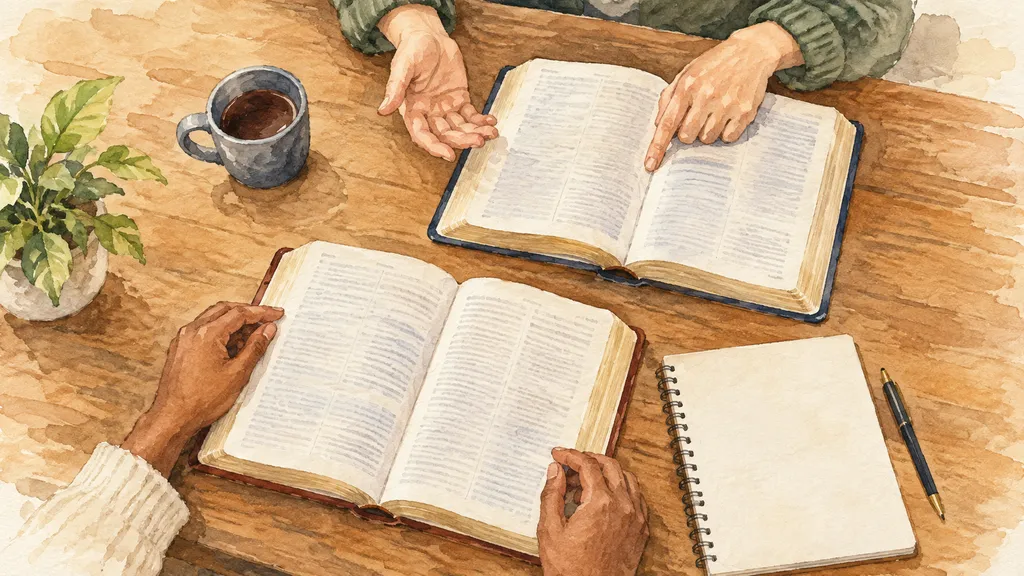
Keep observation, interpretation and application distinct. First ask what the words communicate, then explore their meaning in context, then consider a response. Notice whether you are reading poetry, a story or a letter. Christian interpretations differ; name your church's perspective when relevant rather than presenting it as everyone's assumption (Bible interpretation guidance).
Try a suggested four-meeting progression: prayer in Matthew 6, returning in Luke 15, community in Ephesians 4, then service in Romans 12. For each meeting, invite an observation, ask a question that needs explanation rather than a yes-or-no answer, and leave time for prayer. Let an unanswered question become preparation for next time.
If you want supplementary questions, try a sample study session before choosing a guide. Look for prompts you can understand and answer by returning to the passage. Gospel Daily offers biblical articles and devotionals for Christian encouragement (faith and mission introduction). Keep any reflection alongside the biblical passage, leaving room for your own observations.
Choose your first passage today; for accompanying Christian reading, explore the Gospel Daily books collection.
Frequently Asked Questions
Can teenagers use these Bible study topics?
Choose one passage and explain unfamiliar words together. Invite a question about school, friendship or responsibility without demanding personal disclosure. Let teenagers formulate their own discussion question before you introduce yours.
What if nobody answers a discussion question?
Allow quiet thinking time, then ask everyone to notice one word or action in the passage. Offer paired discussion before returning to the whole group. Avoid answering every question yourself immediately.
Should a Bible study leader know every answer?
You can lead without resolving every question. Record the exact verse and the point of disagreement, then seek help from a trusted church leader or an appropriate commentary before the next meeting.