Bible study books: how to choose guidance that fits your experience
Find guidance that helps you understand Scripture, with clear distinctions between study guides, study Bibles and devotionals.
 Published by Gospel Daily5 min read
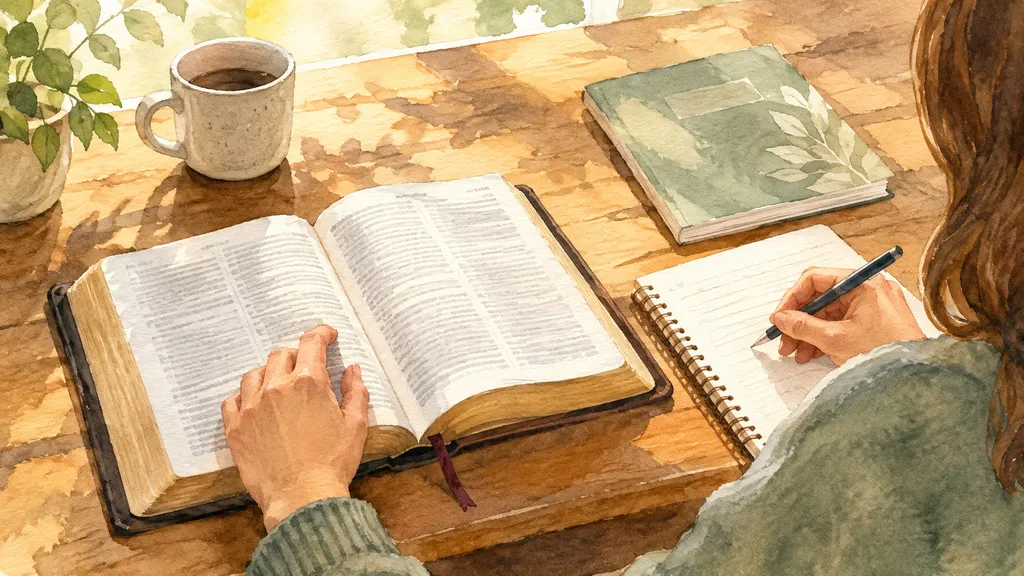
Choose Bible study books by the help you need: explanations of unfamiliar passages, questions that guide your own reading, or background for deeper exploration. Start with a sample session that suits your experience and available time. A useful book should bring you back to Scripture with clearer questions, rather than leave you dependent on the author's conclusions.
Match Bible study books to your experience
If you are beginning, look for a guide that explains references, introduces the biblical book and defines unfamiliar words. Try answering its first question using the passage alone. If the question assumes knowledge you do not have, choose a more introductory starting point without treating that as a setback.
If you already read regularly, identify the next skill you want to develop. Perhaps you want to follow an argument through a letter, understand historical background or recognise the imagery in poetry. Choose questions that exercise that skill rather than simply adding more pages to your routine.
Write a specific aim before browsing: “I want to understand the flow of Philippians” is more useful than “I should study more”. Keep that aim beside the sample. If finding passages is your first obstacle, practise locating a book, chapter and verse before you choose supplementary reading.
Distinguish study guides, study Bibles and devotionals
These formats serve different tasks. Use the following distinctions when reading a book description, then examine a sample to see how the resource actually works.
- A study guide organises reading around passages, questions and sessions. Choose one when you want a route through a biblical book or theme.
- A study Bible places explanatory material alongside Scripture. Choose this format when you want introductions and notes within reach as you read.
- A commentary offers sustained explanation. Choose one when your questions concern the meaning, background or argument of particular passages.
- A devotional combines a shorter reading with reflection or prayer. Choose it when your immediate purpose is devotional encouragement rather than an extended investigation.
King's Church Edinburgh's Bible resource guidance distinguishes study Bibles that introduce and explain biblical books from commentaries for deeper exploration. Keep the biblical text and its accompanying interpretation distinct, whichever format you choose.
Gospel Daily offers biblical articles and devotionals for Christian encouragement, alongside Christian faith books (faith and mission introduction). Use supplementary reflections alongside your passage; do not assume that every Christian book contains a structured study course.
Read the author's background and a complete sample
For Bible study books, author information should help you understand the perspective behind the questions. Look for the writer's church tradition, relevant teaching or research background, and intended audience. Read the introduction as well as the biography: an academic qualification and a pastoral role tell you different things, and neither replaces examining the explanation itself.
Notice whether the writer distinguishes a passage's wording from an interpretation or suggested response. When Christians understand a passage differently, look for an explanation of how the author reaches a conclusion. Bring a particular paragraph to a trusted church leader if you want to discuss its relationship to your church's teaching.
In the sample, ask who is speaking, whom they address and what comes before and after. The Salvation Army's biblical interpretation guide includes context, literary genre, cross-references and application. Prefer guidance that helps you work through those questions before asking what the passage means for your week.
Choose Bible study books for solo or shared reading

For personal study, try a session without looking at the explanatory notes first. Can you locate the passage, follow the instructions and record a response? Look for enough guidance to continue when a question puzzles you, while leaving room for your own observations.
For a group, read the discussion questions aloud before ordering copies. Choose prompts that invite people to explain what they notice in the text, rather than require everyone to disclose personal experiences. Decide whether preparation happens beforehand or together, so newcomers can participate without unexpected homework.
Count all the activities in a session: reading, discussion, written tasks, prayer and any accompanying video. The Scottish Bible Society's manuscript study worksheet, for example, separates context, reading and observation into timed activities. Use a sample as a rehearsal and stop at your actual finishing time; that reveals whether the proposed session fits.
If prayer is the part you need help with, decide whether you want explanations of the practice or written prayers you can use. Keep that purpose distinct from choosing a passage-based study.
Inspect product details and UK purchase options
Before buying Bible study books, match the description to the edition in your basket. Compare the ISBN, publication date, format, page count and contents. A leader's guide and a participant's workbook may look similar while serving different roles. Look for explicit information about separate videos, access codes or other materials the sessions require.
For print, examine type size and writing space; for digital editions, consider whether you can move comfortably between the questions and Scripture. With a used workbook, ask whether the answer spaces are already filled. Borrowing a copy can help you try the layout before choosing your own.
Compare the full delivered price in pounds sterling, not just the cover price. Read the UK delivery estimate against your intended start date, especially for a group order. Set a spending ceiling that includes required companion materials; an appealing workbook is a different purchase if you also need another resource to use it.
For a hypothetical purchase, allow £20.00 overall: a workbook at £12.00 plus delivery of £3.00 gives £12.00 + £3.00 = £15.00, leaving £5.00 within your spending ceiling.
Find related reading after one trial session
Try your chosen guide with one complete passage before planning months of study. Afterwards, ask whether you understand the passage more clearly, can explain your reasoning and have a question worth returning to. These observations give you a practical basis for continuing or changing resources.
For related reading, the Diocese of Sheffield's Bible study resource collection brings together biblical texts, commentary and other study materials. Follow the question your session raises rather than collecting several overlapping guides. You may need a background explanation, not another workbook covering the same ground.
Choose one manageable starting point and give yourself room to read thoughtfully. For Christian reading to accompany Scripture, explore the Gospel Daily books collection.
Frequently Asked Questions
Can I reuse Bible study books?
Yes. Keep answers in a notebook if you want to return to the questions later. Date your entries so you can distinguish earlier observations from new ones.
Should everyone in a study group use the same translation?
Agree on one translation for shared reading, while allowing participants to consult others. When wording differs, identify the verse and discuss the difference before answering the question.