365-Day Bible Reading Plan: PDF and Catch-Up Tips
Start an undated Old and New Testament reading schedule, print it for everyday use and return after interruptions without restarting.
 Published by Gospel Daily5 min read
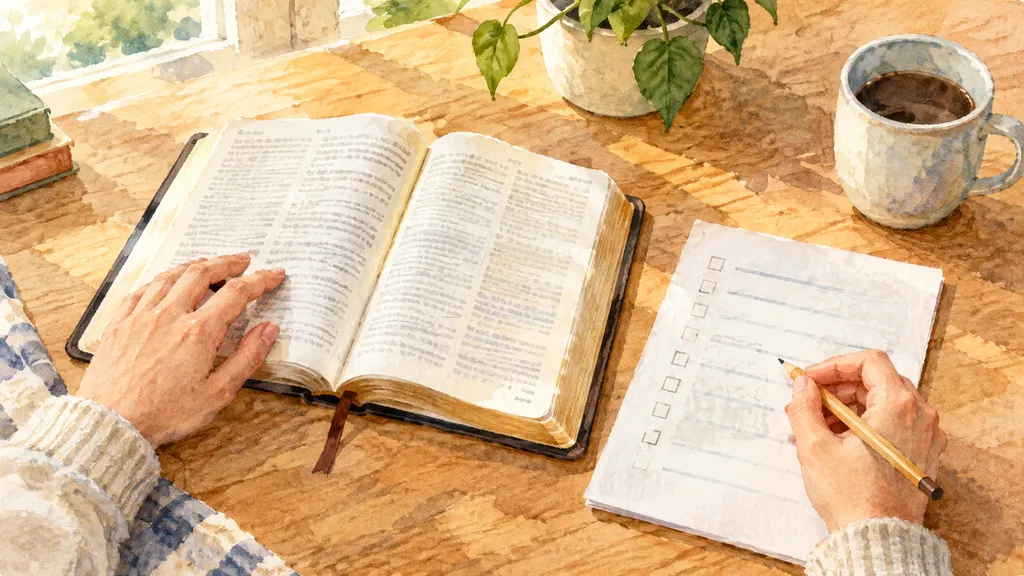
For a 365-day Bible reading plan covering the Old and New Testaments, open the free printable reading schedule. This PDF hosted by CommonWord pairs both Testaments with Psalms or Proverbs and provides numbered days with checkboxes. Begin at Day 1 whenever you are ready, rather than waiting for January.
Download your Bible reading plan and preview the readings
Save the PDF somewhere you can find again before beginning. It contains ten pages of daily references rather than the full biblical text, so keep your Bible beside it. The opening readings are:
- Day 1: Genesis 1:1 to 2:17, Matthew 1 and Psalm 1.
- Day 2: Genesis 2:18 to 4:16, Matthew 2:1 to 18 and Psalm 2.
- Day 3: Genesis 4:17 to 6:22, Matthew 2:19 to 3:17 and Psalm 3.
Read across each row, then tick its box after completing all the passages. Psalms and Proverbs have their own column, although they belong to the Old Testament. Keep your place separately in each part of your Bible.
For reading without paper, Biblica offers an online yearly schedule with a start-date field and Old Testament, New Testament, and Psalms and Proverbs sections. Choose either paper or online tracking as your main record so you do not have to reconcile two lists.
Understand the Bible reading plan’s order and coverage
Choose the order that helps you follow what you read. Canonical order follows the books as arranged in your Bible. Chronological order follows a proposed sequence of events. Combined daily readings let you spend time in different parts of Scripture rather than finishing the Old Testament before beginning the New.
The linked PDF uses combined readings. Its Old Testament column moves from Genesis into Job before Exodus, while its New Testament column begins with Matthew. It therefore does not follow straight contents-page order throughout.
For help understanding the wider sequence, King’s Church Edinburgh’s Bible Reading Path groups Old Testament books into beginnings, kingdom and exile, with a separate New Testament route. Use that background to locate a book within the larger story rather than expecting every adjacent book to describe the next event.
The PDF’s scheduled books follow the Protestant collection. Bible Society’s guide to biblical collections explains that Protestant Bibles recognise 66 books, Catholic Bibles 73, and Orthodox collections differ. If your aim includes the additional books in your church’s Bible, choose a schedule covering that collection rather than treating a Protestant schedule as interchangeable.
Use the references with the KJV or another translation
This Bible reading plan supplies references, not a translation’s wording. You can look up its passages in the King James Version or another translation you understand. For example, the first entry directs you to Genesis regardless of which English wording you read.
Use one translation for your main reading. Keep questions about unfamiliar words beside the exact reference so you can return to them without losing your place. When a verse number differs in your edition, follow the surrounding passage and your edition’s notes rather than guessing where to stop.
Read the beginning and end references carefully. A reading can stop partway through a chapter; reading only the opening chapter number could leave part of the assigned passage unread. Mark the stopping verse before closing your Bible.
Print the Bible reading plan on A4
Use these suggested settings as a starting point, then judge the preview before printing the whole document:
- Save the PDF and open its print dialogue.
- Select A4 paper and portrait orientation.
- Choose Fit or Fit to printable area to keep the outer columns inside the margins.
- Print the first page as a trial, with one PDF page per sheet.
- Read the smallest references and try marking a checkbox before printing the remaining pages.
If the trial feels crowded, avoid shrinking several pages onto one sheet. Keep the schedule in a folder beside your Bible, or print only the page you are currently using. These are suggested printing choices, not a requirement to buy supplies.
For a hypothetical printing budget, suppose you allow £5.00, a print shop charges £0.20 per page and you print 10 pages. The calculation is 10 × £0.20 = £2.00, leaving £3.00 for a folder or other supplies.
Catch up without restarting your Bible reading plan
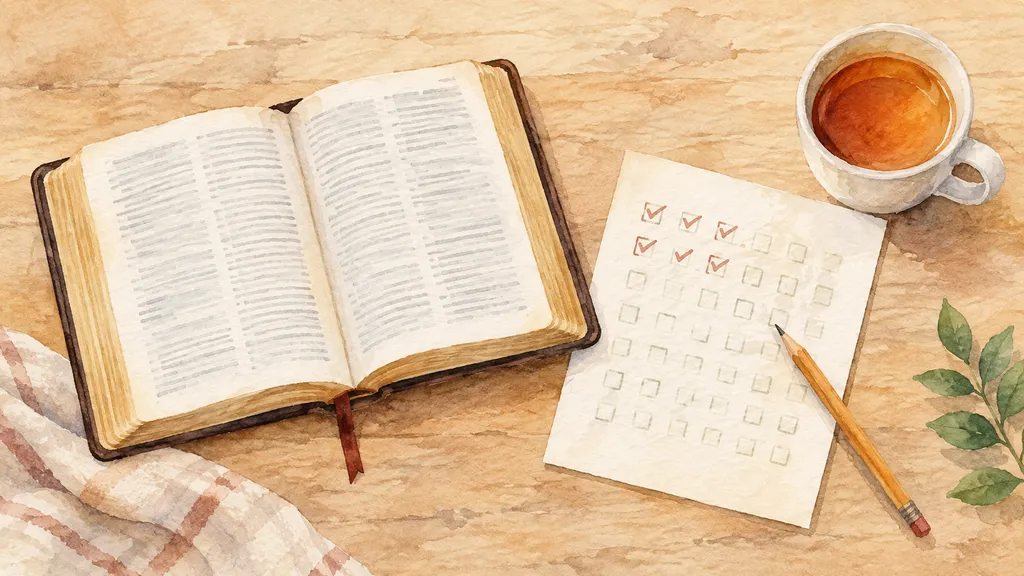
After an interruption, choose between keeping your original finish date and continuing at a sustainable pace. You do not have to restart Genesis because you missed a reading. Try one of these approaches:
- Resume at the next unticked day. Move the finish date rather than increasing tomorrow’s reading.
- Spread a short backlog. Add one missed passage to a later session, keeping its reference beside your current place.
- Separate reading from deeper study. Record a difficult question and give it another session instead of stopping the whole schedule.
For example, after missing several sessions, read the next incomplete row today and decide afterwards whether extra reading is realistic. Keep unfinished passages visible rather than ticking a whole day when only one column is complete.
If your available time has changed, let the schedule take longer than a year. A numbered plan can remain your route even when its original timescale no longer suits your circumstances.
Leave room for prayer alongside the daily passages
Try reading at one repeatable moment, such as after breakfast. King’s Church Edinburgh’s daily reading guidance encourages attentive reading, prayer and a rhythm that accommodates work patterns. Keep a brief note of what you noticed before opening supplementary material.
Gospel Daily offers biblical articles and devotionals for Christian encouragement (faith and mission introduction). Use a reflection alongside your passage, leaving room to express gratitude, ask a question or pray in your own words.
Begin with the next unread passage; for supplementary Christian reading, explore the Gospel Daily books collection.
Frequently Asked Questions
Do I need a new Bible reading plan PDF for 2026?
An undated numbered schedule can be used in 2026 or another year. Write your own start date beside Day 1.
Can a household follow the plan together?
Read the same passages separately, then share one observation when you meet. Let children join a shorter passage without requiring the household to keep an identical pace.